

Livestock Methane Recycling

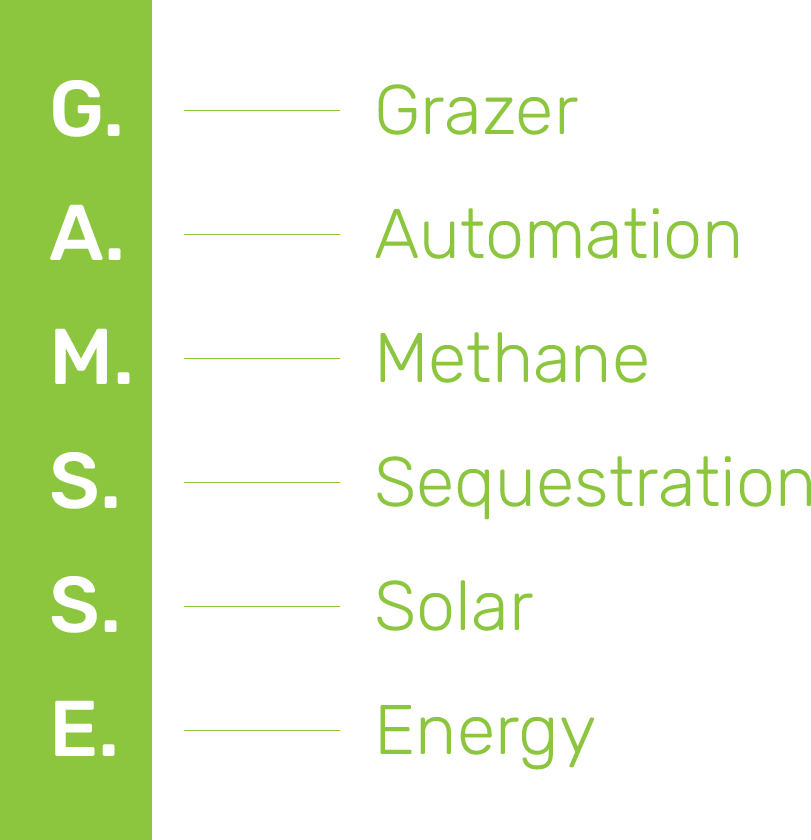
Produce electricity
Reduce animal stress
Capture methane
Increase farmer profits
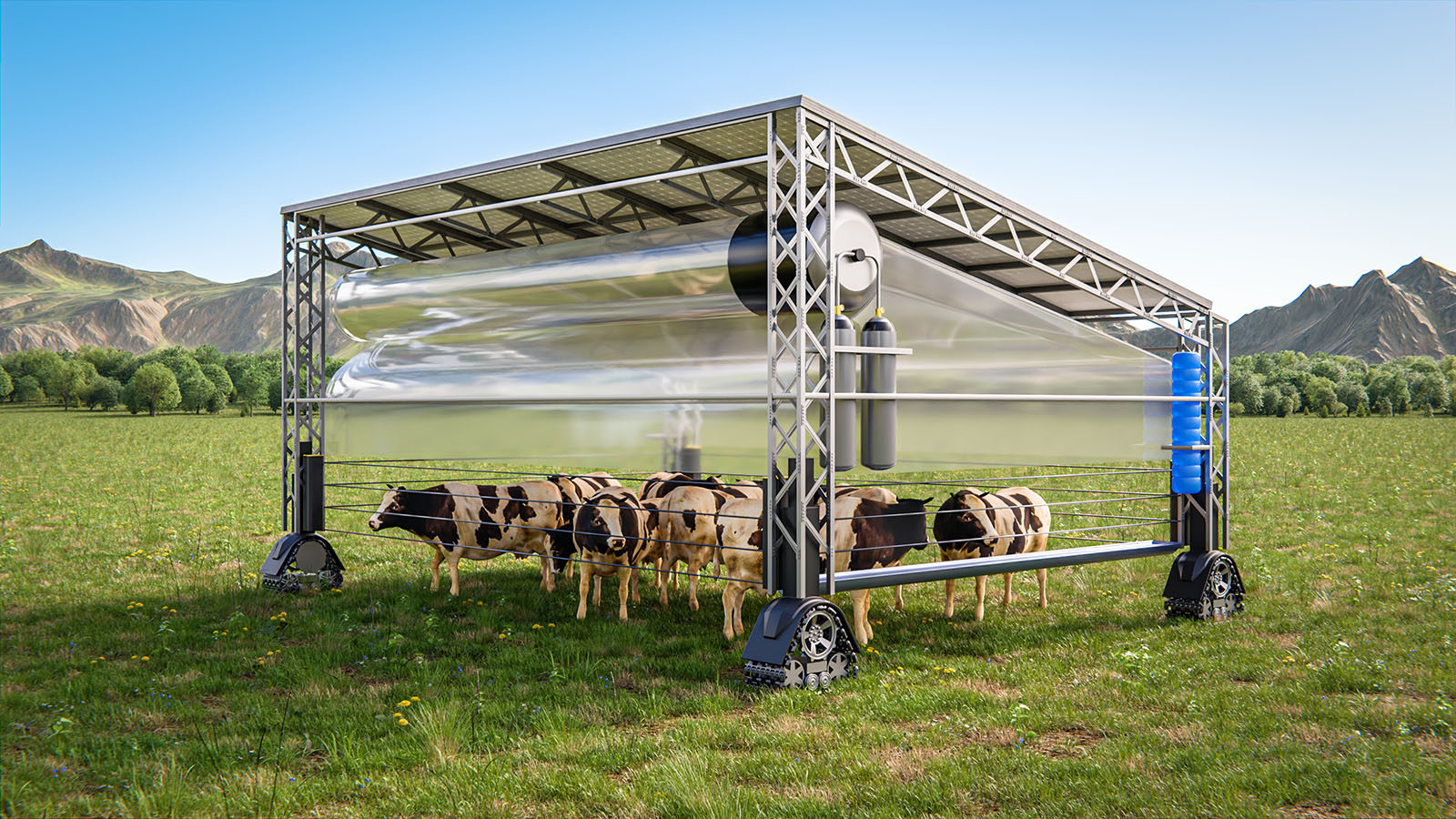

GAMSSE was designed to help the farmer become self-sufficient while creating a better environment for the grazing animals, and help sequester methane.
University of Georgia
Grazing Impacts on Pasture Composition

OVERGRAZING THE PASTURE
The G.A.M.S.S.E. was designed to replace the carnivore predator.
Grazing animals in the wild are constantly on the move, and don’t have the opportunity to overgraze the pasture. In the process, they apply the perfect compaction and sequester more CO2 in the soil, while improving the yield of their pasture.
Methane Myths
RUMINANTS
Contrary to beliefs by some scientist and some of the population, killing all the ruminants in the world would not change the methane production much, since we cannot stop grass from growing. The rotting grass would produce methane without any benefit. The only thing we would achieve is to lose the billions of tons of protein the ruminants provide. The grass would rot and produce similar amount of methane more or less.
PEAT BOGS
Peat bogs might act as a water filters and carbon sink, my suspicion is that man has altered the natural process for the last 200 years, through acid rain, leaching nutrients from chemicals, fertilizers, global warming.
Loss of perma frost and deforestation. We might be at a point where all the wetlands and peat bogs are releasing more methane than sequestration of carbon. Combine with the food waste we put in our landfills and that could account for the higher volume of methane released worldwide.
Ministry of Agriculture, Food and Rural Affairs
Energy Yields from a Farm-Based Anaerobic Digestion System

“The science on the methane produced by ruminants is all over the map from 20 to 500 liters per day. Methane conversion to CO2 – 20 to 80 times.”
Assuming the anaerobic digestion system previously mentioned is the same as a cows’ stomach we can easily get to this data:
1 wet ton of corn silage will produce: 180m3 biogas = 99 cubic meters of methane.
An average cow will consume 2-3% of its body weight per day.
1200 lb x 2.5% 30 lb of grass or corn silage per day or 11,000 lb per year = 5 tons of grass. Eaten by the cow will produce: 495 cubic meters of methane.
One cubic meter of methane = 771 grams.
One cow can produce 382kg of methane per year.
5 tons of corn silage might produce the same amount of methane – 382kg.
Assuming we have 1,300,000,000 cows in the world, the yearly methane production is 500 million tons.
If the anaerobic digestion is similar to a cow’s stomach, the best use for the biomass is to feed cows and capture the methane. Letting the grass rot as it occurs in nature will produce the same 500 milion tons with no benefits, no milk, cheese, meat, leather or tallow.
In conclusion if we capture most of the ruminant’s methane, they could be seen as methane concentrators making collection easier while enjoying all the benefits they provide.
“Use of manure facility is a game changer if the government recognize the major roll
it can play for the health of the people and the planet. “
Compost Manure in a Green World Economy
On average, one acre of land will produce 8 tons of wet biomass. A farmer with 750 acres could potentially produce 6.000 tons of biomass or 500 tons of methane per year if the farmer was aided and mandate to compost 75% of his total biomass output and returned to the land by efficient means, we would mimic what earth was like before the industrial revolution when 95% of the population lived in farms, the nutrients were in constant recycle mode, for animals and people, the biomass never left the farm.
The benefits are numerous:
1. Reduce the need for chemical fertilizer.
2. Less run off nutrients in our water system.
3. More healthy food production.
4. Reduce methane production from rotting food waste in our dumps.
5. Reduce cost of food production.
How to implement
Each farmer would accept a percentage of food waste from the municipality, grocery stores, food processing, plants, grass clipping from municipality and its own animal manure in order to make 75% of the yearly biomass that he grows each year. In the case of a farmer that choose to grow corn only to feed pigs, he would need to partner up with the local pig farmer or lease some land to the pig farmer in order to collect the manure. The farmer would have many choices, managed forest to remove all dead trees and turn them in wood pellets for fuel, use the grass that is cut along the highways. Whatever is the most efficient, this would reduce the methane to CO2.
“Methane is a far more potent greenhouse gas than CO2, even though it only lasts about a decade in the atmosphere, whereas CO2 persists for a couple of centuries.”
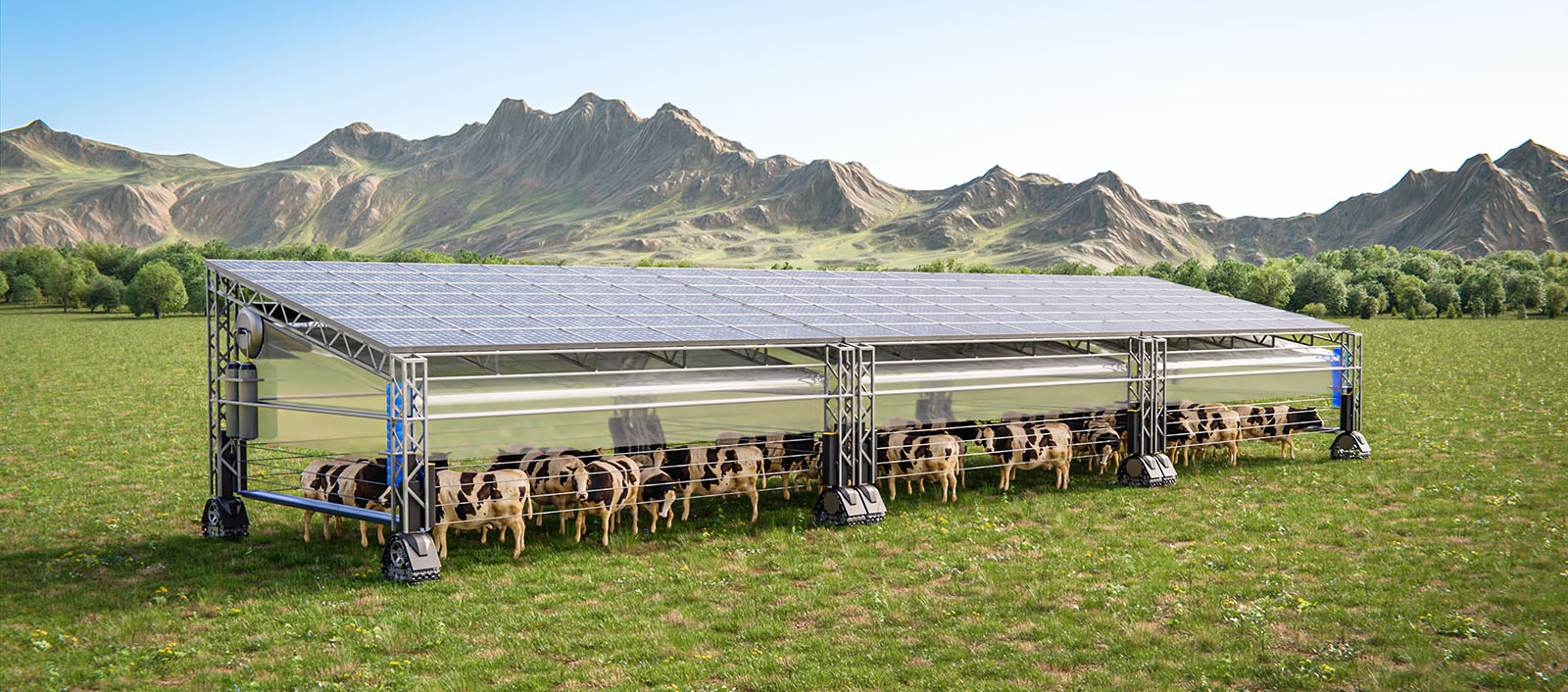
Combination of all the structure, can make the farmer self-sufficient, net producer of electricity required on the farm
EXAMPLE
Average farm – 750 acres.
Example of dairy farm with 400 cows.
Diesel required – 75.000 liters or 500.000 kwh of electricity.
Electricity for barn, lighting, milking, vehicles, cars, trucks…
Total upward of 1.500.000 KWh per year to run 100% on clean renewable energy.
Production of electricity from all the buildings up to 1.900.000 KWh.
“When the G.A.M.S.S.E. is implemented by the farmers, they will become carbon neutral.“